ISO 27001 Explained: Who It Affects, Requirements & Benefits
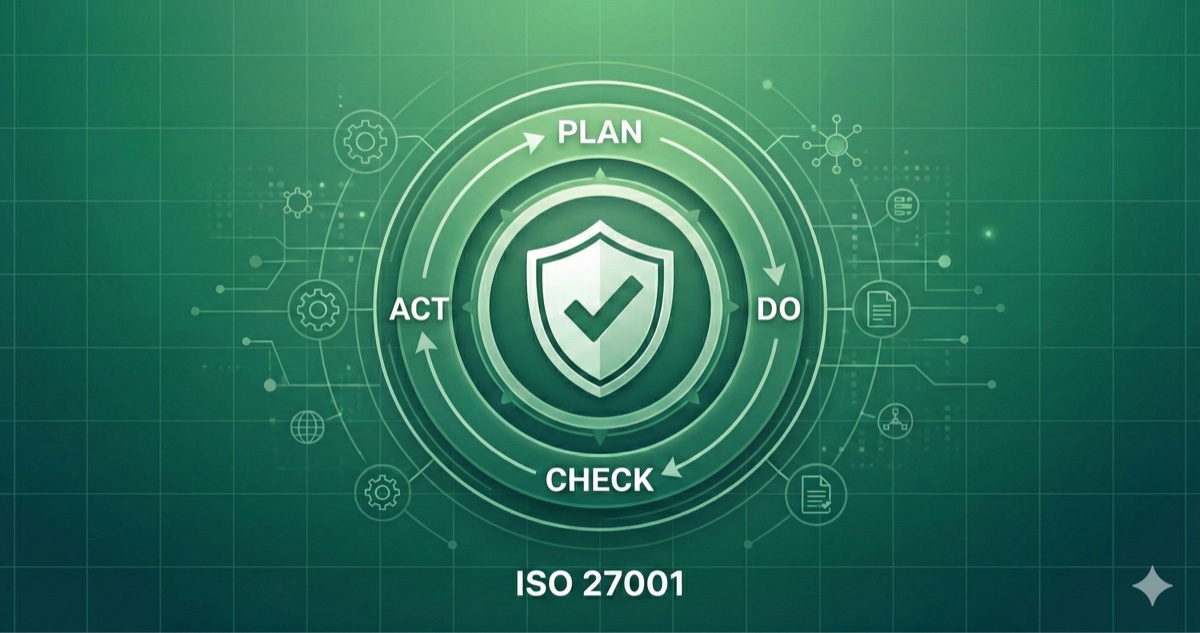
ISO 27001 is the international standard for Information Security Management Systems (ISMS). Unlike regulations that are imposed by law, ISO 27001 is a voluntary standard — but calling it “optional” is increasingly misleading. In practice, it has become the entry ticket for enterprise contracts, government tenders, and serious business relationships.
Security is not a product you can buy. It’s a process you must build, maintain, and continuously improve. ISO 27001 gives you the framework to do exactly that.
Who Does ISO 27001 Affect?
ISO 27001 is relevant to any organization that wants to demonstrate it takes information security seriously. There’s no industry restriction, no size threshold, and no geographic limitation.
In practice, ISO 27001 is increasingly required by:
- Enterprise clients — large companies routinely require ISO 27001 certification from their vendors and partners. No certification? You’re out of the procurement shortlist.
- Government contracts — many public sector tenders require ISO 27001 or equivalent security certifications, especially for IT services and data handling.
- Regulated industries — financial services, healthcare, and critical infrastructure organizations use ISO 27001 as evidence of security measures required by DORA, NIS2, and GDPR.
- SaaS and technology companies — customers expect their cloud providers and software vendors to be ISO 27001 certified.
- Companies processing sensitive data — personal data, financial records, intellectual property, trade secrets.
The Growing Pressure
Five years ago, ISO 27001 was a nice-to-have. Today, it’s a dealbreaker. The convergence of GDPR, NIS2, DORA, and supply chain security requirements means that demonstrating a structured, auditable security management system is no longer optional for any organization that operates in the B2B space.
Key Requirements
ISO 27001 requires organizations to establish, implement, maintain, and continually improve an ISMS. The standard is structured in two parts:
Management System Requirements (Clauses 4-10)
- Context — understand your organization, interested parties, and the scope of your ISMS
- Leadership — top management must demonstrate commitment, establish a security policy, and assign roles
- Planning — identify risks and opportunities, set security objectives, plan how to achieve them
- Support — provide resources, ensure competence, maintain awareness, document everything
- Operation — implement risk treatment plans and security controls
- Performance evaluation — monitor, measure, audit, and review
- Improvement — address nonconformities and continuously improve
Annex A Controls (93 Controls in 4 Themes)
The 2022 version of ISO 27001 organizes 93 controls into four themes:
| Theme | Controls | Examples |
|---|---|---|
| Organizational | 37 | Information security policies, roles, asset management, supplier relationships |
| People | 8 | Screening, terms of employment, awareness, disciplinary process |
| Physical | 14 | Physical security perimeters, equipment security, clear desk policy |
| Technological | 34 | Access control, cryptography, network security, secure development, backup, logging |
You don’t need to implement all 93 controls — you select those that are relevant to your risk assessment. But you must justify why you excluded any control.
Risk Assessment and Treatment
The core of ISO 27001 is risk management:
- Identify information assets and their value
- Identify threats and vulnerabilities
- Assess the likelihood and impact of risks
- Decide how to treat each risk (mitigate, accept, transfer, or avoid)
- Implement controls to mitigate unacceptable risks
- Monitor and review continuously
Why ISO 27001 Matters
- Win contracts: ISO 27001 certification opens doors that no amount of marketing can. Enterprise procurement teams use it as a binary filter.
- Prove compliance: ISO 27001 provides evidence for GDPR (Article 32 — security of processing), NIS2 (risk management measures), and DORA (ICT risk management framework).
- Reduce insurance costs: Cyber insurance providers offer better terms to ISO 27001-certified organizations.
- Prevent breaches: Organizations with an ISMS detect and respond to incidents faster. The structured approach catches gaps that ad-hoc security misses.
- Build trust: Certification is verified by accredited third-party auditors. It’s not a self-assessment — it’s independently validated.
What Happens If You Don’t Have ISO 27001
ISO 27001 has no direct regulatory fines — it’s a voluntary standard. But the consequences of not having it are increasingly severe:
A Scenario That Costs Millions
This is an illustrative scenario based on common business patterns.
A software company with 200 employees builds a successful enterprise CRM platform. Their largest client, a €500M financial services company, accounts for €2 million per year in revenue. During the annual vendor review, the client’s procurement team implements a new policy: all technology vendors must demonstrate ISO 27001 certification within 12 months.
The software company doesn’t have ISO 27001. They never prioritized it — “we’re careful with security” was the unofficial policy.
Meanwhile, a disgruntled ex-employee — whose access was never revoked — downloads the entire customer database two months after leaving the company. 50,000 customer records, including contact details, contract values, and communication history, are sold to a competitor.
The consequences cascade:
- The financial services client terminates the contract — €2M/year gone
- Two other enterprise clients follow when they learn about the breach — another €1.5M/year
- A GDPR investigation reveals: no access review procedures, no offboarding security checklist, no audit trails, no incident response plan
- GDPR fine: €500,000
- Cyber insurance claim denied — the insurer cites “failure to maintain reasonable security measures”
- The company learns that “we’re careful with security” doesn’t cut it without documented, auditable processes
Total cost: €4M+ in the first year alone. An ISO 27001 certification would have cost €30,000-€80,000.
How to Get Started
1. Get Management Buy-In
ISO 27001 requires top management commitment. This isn’t optional — auditors will verify it. Present the business case: contracts won, risks reduced, breaches prevented.
2. Define the Scope
Decide what’s included in your ISMS. Start with the most critical systems and data. You can expand the scope later. A focused scope is easier to certify and maintain.
3. Conduct a Risk Assessment
Identify your information assets, threats, and vulnerabilities. Assess risks and decide how to treat them. This is the foundation of your entire ISMS.
4. Implement Controls
Based on your risk assessment, implement the relevant Annex A controls. Document everything — policies, procedures, and evidence of implementation.
5. Internal Audit and Management Review
Before the certification audit, conduct an internal audit to identify gaps. Hold a management review to demonstrate leadership commitment and approve corrective actions.
ISO 27001 is not about perfect security — it’s about managed security. It proves that you know your risks, you’ve decided how to handle them, and you continuously improve. In a world where every business partner asks “how do you protect our data?”, ISO 27001 is the answer they trust.
Ready to assess your compliance?
Start your free assessment today and find out where you stand with GDPR, NIS2, DORA, ISO 27001, and more.
Written by
Metrica.uno Team
Content Team
Metrica.uno Team is part of the Metrica.uno team, helping organizations navigate AI compliance with practical insights and guidance.
Related Articles
Cyber Resilience Act (CRA) Explained: Who It Affects, Requirements & Penalties
Everything you need to know about the CRA: who it applies to, security requirements for digital products, SBOM obligations, and consequences of non-compliance.
DORA Explained: Who It Affects, Requirements & Penalties
Everything you need to know about DORA: who it applies to, digital resilience requirements, ICT third-party risk management, and consequences of non-compliance.
ENS (Esquema Nacional de Seguridad) Explained: Requirements & Certification
Everything you need to know about Spain's ENS: who needs it, security requirements, certification levels, and why it's essential for Spanish public sector contracts.